Release date:


AI-Generated YouTube Thumbnails Are Getting More Clicks — Here's What the Data Shows
There's a quiet shift happening in video marketing. Creators and brands who've handed their YouTube thumbnail design over to AI aren't just saving time — they're watching their click-through rates climb. The numbers are compelling enough to make any content team pay attention.
The CTR Problem Every Creator Knows
A thumbnail is the first — and often only — thing that determines whether someone clicks on a video. Yet for most creators, it's an afterthought: a task squeezed in after filming, editing, and writing descriptions, often when creative energy is at its lowest. The result is thumbnails made from gut instinct and habit, with little data behind them.
That approach appears to be leaving clicks on the table.
What the Experiment Showed
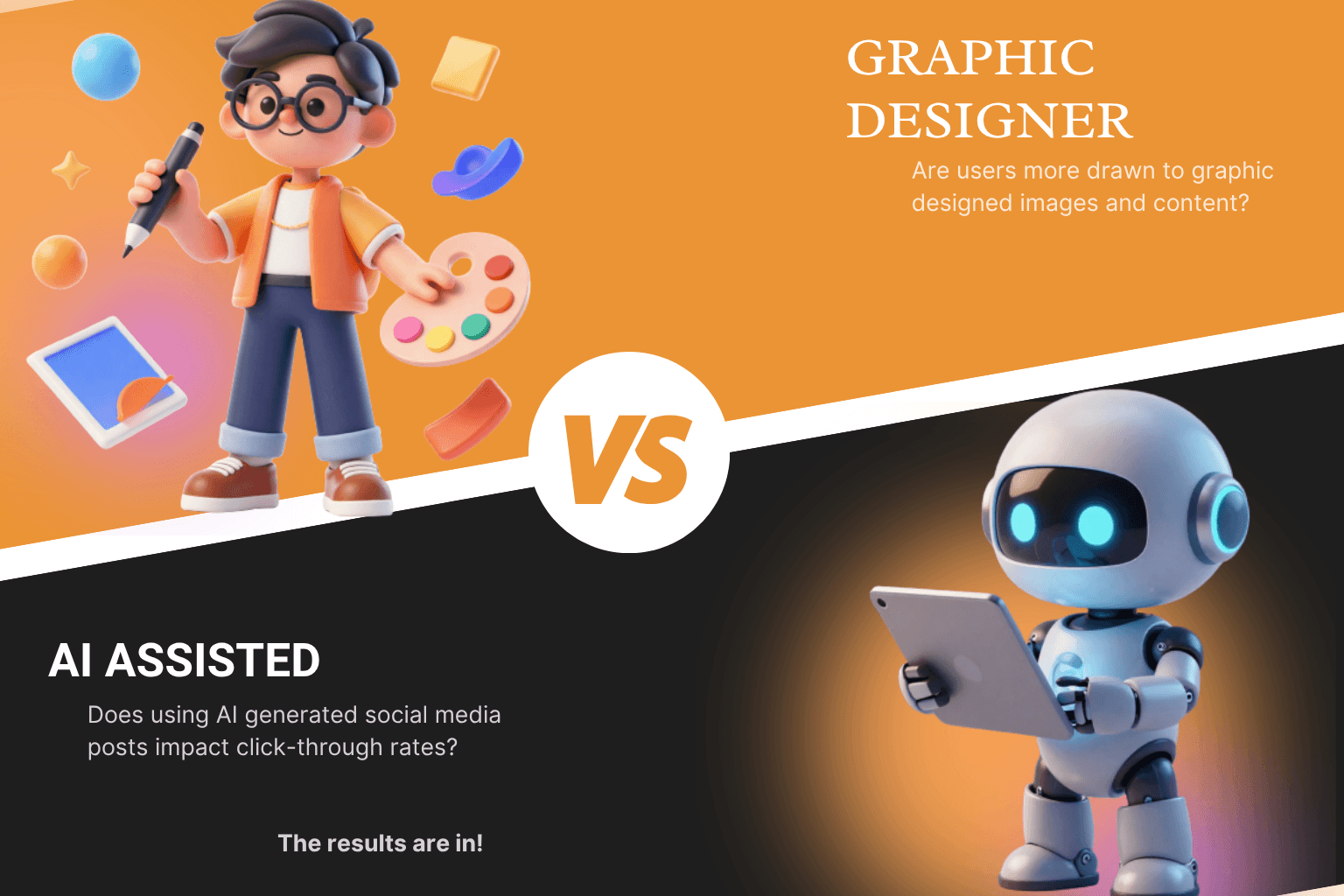
A documented 30-day experiment in which a creator switched entirely to AI-generated thumbnails produced a striking outcome. Average click-through rate rose from 4.1% to 6.3% over the course of the month. To put that in context, YouTube itself considers 2–10% a normal CTR range, with anything above 5% classified as strong performance depending on niche and audience size. That's a move from the lower half of normal to solidly above average — driven almost entirely by a change in thumbnail design process.
The content itself didn't change. Posting frequency stayed the same. Topics were consistent. The primary variable was the thumbnails.
Why AI Outperforms Human Design Instinct
The reason AI-generated thumbnails tend to perform better isn't that they're more artistic. It's that they're more informed. AI thumbnail tools are trained on what actually performs on YouTube — the visual patterns that historically get clicks, the colour contrasts that stand out in a crowded feed, the text lengths and compositions that drive engagement across different niches and audience sizes.
A human designer works from taste, experience, and intuition. An AI works from all of that plus a vast dataset of what has and hasn't worked at scale. On a platform as algorithmically competitive as YouTube, that data advantage compounds.
The experiment also revealed some uncomfortable truths about common human design habits. Muted, aesthetically pleasing colour palettes — the kind a designer might personally prefer — tend to get lost in a feed dominated by high-contrast thumbnails. Thumbnails with heavy text, treated almost like mini headlines, underperform against cleaner designs with three to five words at most. These aren't subjective opinions; they're patterns the AI has already absorbed.
The Brief Still Matters
One consistent finding from the research: the quality of the AI output is directly tied to the quality of the prompt it's given.
Generic briefs produce generic thumbnails. A prompt like "thumbnail for a budgeting video" yields something technically competent but unremarkable. A prompt that captures the emotional hook — "the moment someone realises they've been budgeting wrong for years; surprise, slight humour, relatable" — produces something with genuine stopping power.
This is where human strategic thinking remains essential. AI executes design decisions efficiently and with data behind them. But identifying the emotional angle, the core tension, the viewer's likely mindset — that still requires a person. The best results come from a hybrid approach: human-led creative strategy feeding into AI-led execution.
The Time Equation
Beyond CTR, the operational case for AI thumbnails is straightforward. The experiment documented thumbnail creation time dropping from approximately 90 minutes per video to around 15 minutes. For a creator publishing three videos per week, that's a saving of roughly 15 hours per month — time that can be redirected to scripting, filming, community engagement, or simply producing more content.
For marketing teams managing multiple channels or high-volume content schedules, the efficiency gains scale accordingly. Thumbnail design is rarely where strategic value is created; it's where time disappears. AI reclaims that time without sacrificing — and, based on the data, while actually improving — output quality.
The Broader Shift in Video Marketing
This isn't an isolated experiment. AI thumbnail generation is becoming a mainstream component of video marketing workflows because it addresses a genuine problem: the gap between the strategic importance of thumbnails and the time and skill typically allocated to them.
Thumbnails have always been one of the highest-leverage touch points in YouTube marketing. A one or two percentage point improvement in CTR, sustained across a library of videos, has a compounding effect on channel growth, ad revenue, and organic reach. Tools that can reliably move that needle — while reducing production overhead — are going to become standard.
The question for content teams is less whether AI thumbnail tools are worth using, and more how quickly to build them into the workflow.
What This Means in Practice
For creators and marketing teams considering the shift, a few principles emerge from the evidence:
The emotional hook in the brief is everything. Spend the time upfront articulating what the video is really about — the feeling, the tension, the surprise — not just the topic.
Test AI output against your existing benchmarks. CTR is the metric that matters; use it to evaluate whether the tools are working for your specific audience and niche.
Don't expect results in week one. The documented experiment showed modest results in the first two weeks, with the clearest gains emerging in weeks three and four as briefing quality improved.
Treat it as a collaboration, not a replacement. The strongest thumbnail strategy combines data-driven AI execution with human creative direction. Neither alone produces the best outcome.
The data points in one direction: AI-generated thumbnails are getting more clicks. For any team serious about YouTube performance, that's a finding worth acting on.